


While a steamy shower might feel luxurious, too much moisture can quickly lead to problems in your bathroom. Unfortunately, not all homes are equipped with a bathroom exhaust fan, especially older houses.
If you find yourself without a bathroom fan, your best bet is to install one — though we know that’s not always possible. Let’s go over the importance of ventilation and explore some of your options to reduce moisture in the meantime.
Why Bathroom Ventilation Matters
In Michigan’s humid summers and cold winters, condensation on cool tile and mirrors makes bathrooms especially prone to moisture problems. Extra humidity can introduce mold, bringing musty odors and potential health problems. Moisture can also lead to peeling paint and other damage.
A bathroom fan acts as an exhaust ventilation system. In other words, it pulls moisture-filled air from the room and directs it through a duct to the outside of your home. If you have the opportunity to install one, it’s worth the investment.
Dehumidifiers Are a Powerful Alternative for Moisture Control
A dehumidifier works differently but has a similar effect. Rather than venting outside, dehumidifiers pull moisture from the air and collect it in a reservoir for you to empty. Consider installing a whole-home dehumidifier, getting a portable one or both.
Whole‑home dehumidifiers control humidity across multiple rooms, which helps bathrooms dry faster after showers and supports overall indoor air quality.
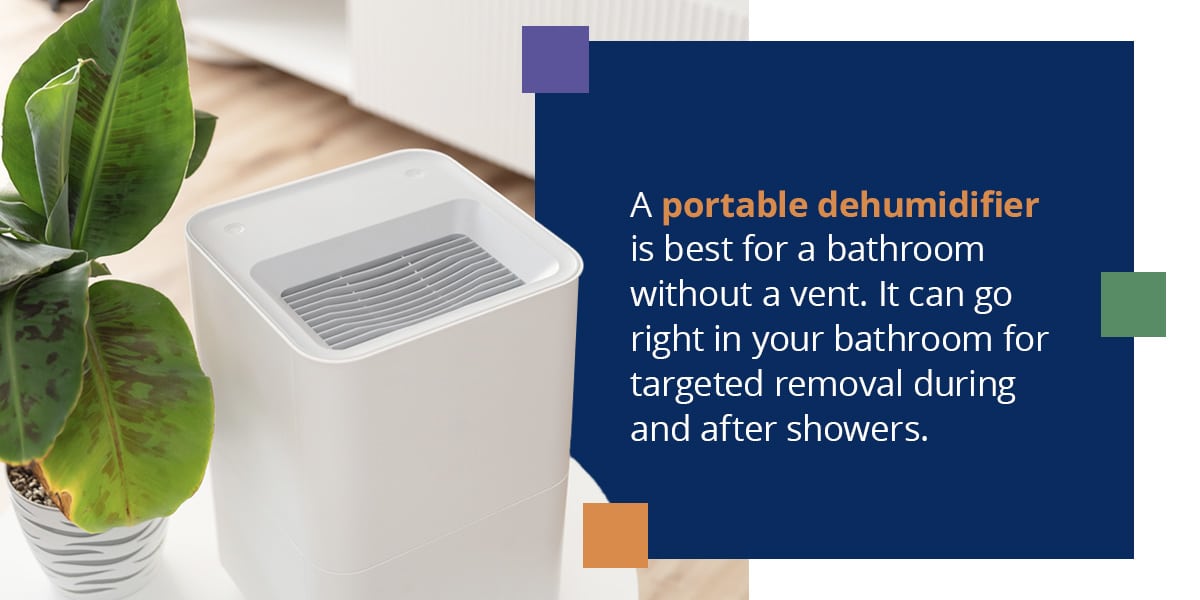
A portable dehumidifier is best for a bathroom without a vent. It can go right in your bathroom for targeted removal during and after showers. It’s a great option if you’re planning to install a bathroom exhaust fan eventually — you can continue to use it in other moisture-prone parts of your home, like the basement.
If you opt for a portable dehumidifier, just be sure to place it away from direct water like any other electrical appliance.
Portable Fan and Dehumidifier Combinations
Before you weigh the benefits of bathroom dehumidifiers versus exhaust fans, remember that you don’t have to choose one or the other. A portable bathroom fan and dehumidifier combo is a convenient two-in-one solution.
This kind of system can move humid air while pulling moisture from it, which helps if ducting to the outside isn’t possible.
Other Strategies to Reduce Moisture
If purchasing an exhaust fan for your bathroom isn’t an option in the near future, you can still take steps to reduce moisture and odors.
1. Open the Door or Windows
Open a window or door and use a plug‑in fan to push humid air outside during and after showers.
2. Change out Your Towels
Certain fabrics hold less moisture than others. Microfiber towels usually dry faster than cotton, for example. Switching can be a helpful strategy for lowering the overall moisture in your bathroom.
3. Clean the Shower Doors and Walls Often
Keep a squeegee in your bathroom and wipe down the doors and walls after each shower. You can also use a daily shower cleaning spray to prevent mold and mildew.
Get a Bathroom Ventilation Consultation
Still have questions about bathroom fans, dehumidifiers or ventilation? FLAME Heating, Cooling, Plumbing & Electrical is your source for friendly, expert guidance from a local Michigan team. We offer a full range of HVAC services and indoor air quality solutions, including whole-home dehumidifiers.
You can contact us online to learn more or request a bathroom ventilation consultation.
Last Updated on October 10, 2025 at 12:50PM EST