

When Michigan winter hits, the last thing anyone wants is a furnace that won’t start, a heat pump frozen solid or a cold shower on a frosty morning. The good news is that a little preparation before temperatures drop can save you from unexpected breakdowns, costly repairs and long waits for service calls.
This guide walks through simple, practical ways to get your heating systems ready for the season ahead, including furnaces, heat pumps and water heaters. Some steps are easy DIY wins, and others are best left to trained professionals with the tools and expertise to keep your equipment safe and efficient.
Whether your home runs on gas or electric systems, these checklists will help you stay warm and worry-free during every cold front.
Your Pre-Winter Furnace Maintenance Checklist
If you have a furnace, it’s the heart of your home’s comfort in winter. It works hard to keep every room warm day after day. A little attention now goes a long way toward preventing surprises later. Think of this as your first line of defense against midseason breakdowns.
DIY Furnace Checklist
Most homeowners can handle these simple tasks without any special skills or tools:
- Replace the air filter: Air filters can last anywhere from three months to a year. It’s a good idea to check them monthly and replace them if they look dirty.
- Test your thermostat’s heating function: Switch from cooling to heat mode and confirm the furnace starts and responds correctly.
- Clear the area around the furnace: Keep at least 3 feet of space clear. Clutter and stored items can restrict airflow or create fire hazards.
- Keep vents and registers clean and unobstructed: Make sure furniture, curtains and rugs aren’t blocking airflow. Then, dust or vacuum them to improve circulation.
These simple steps can boost efficiency and comfort, but they can’t replace the in-depth checks a professional performs.
When to Schedule a Professional Tuneup
A licensed technician looks beyond the basics. They’ll inspect internal parts, test for safety issues and fine-tune your system so it runs reliably all winter. A professional tuneup typically includes:
- Inspecting and cleaning burners and flame sensors.
- Checking the heat exchanger and flue system for cracks or corrosion.
- Testing gas pressure, safety controls and ignition systems.
- Performing combustion analysis
Professional maintenance can improve performance, extend your system’s lifespan and reduce energy use. These inspections can reveal hidden issues before they turn into breakdowns on the coldest day of the year.
The Essential Heat Pump Maintenance Checklist
If your home uses a heat pump, winter prep looks a little different. Unlike furnaces, heat pumps move heat rather than generate it. They rely on a delicate balance of airflow, refrigerant and electrical performance. A few seasonal checks can help your system keep up with Michigan’s coldest stretches.
DIY Heat Pump Checklist
You don’t need to be an HVAC expert to help keep your heat pump in good shape. You can do these three things:
- Clean the outdoor unit: Remove leaves, sticks or debris that could block airflow. Keep at least 2 feet of clearance on all sides.
- Change the indoor air filter: Just like with a furnace, a clean filter reduces strain and helps your system run efficiently.
- Monitor the defrost cycle: If your unit stays in defrost mode constantly or builds up ice, it may need professional attention.
A clean, clear unit can improve efficiency and help prevent wintertime strain that leads to higher bills or frozen components.
The Importance of Professional Inspections
Even if your heat pump seems to be running fine, an annual inspection is worth it. Technicians will use specialized equipment to:
- Verify refrigerant levels and look for leaks.
- Inspect electrical connections and measure voltage.
- Test the defrost cycle and auxiliary heat operation.
- Confirm proper airflow and thermostat response.
Because heat pumps serve as both heating and cooling systems, professional care helps protect your investment year-round. A small adjustment now can prevent bigger issues when the temperature dips into the single digits.
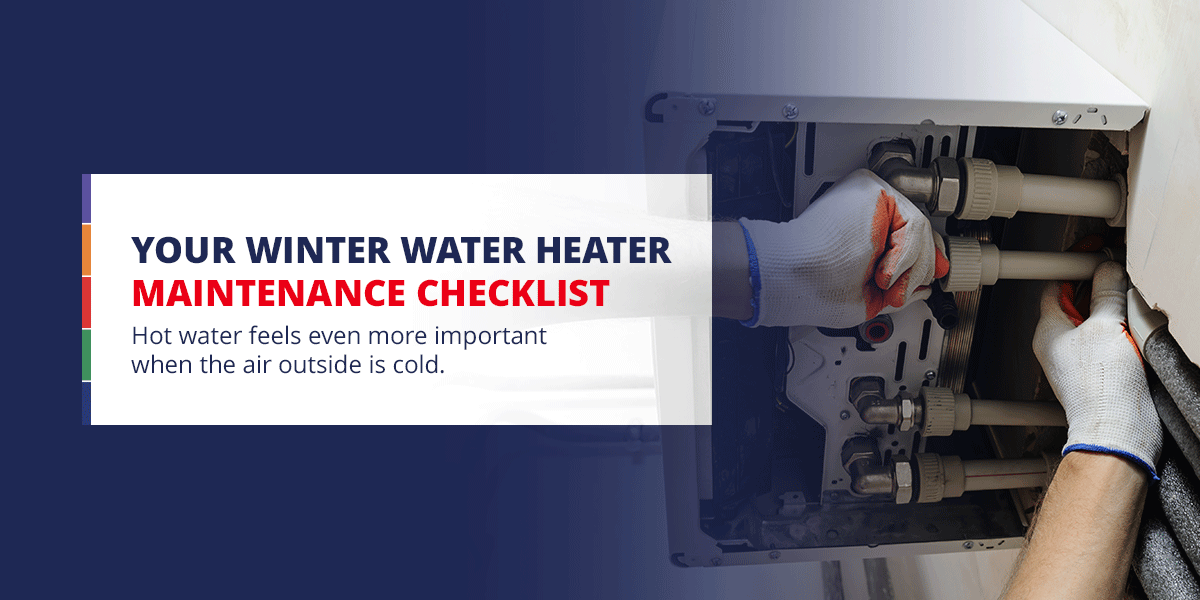
Your Winter Water Heater Maintenance Checklist
Hot water feels even more important when the air outside is cold. Your water heater works harder in winter, compensating for colder incoming water and heavier household demand. A few minutes of maintenance can improve performance and help prevent leaks, sediment buildup or unexpected shutdowns.
Gas Water Heater Maintenance Checklist
If you have a gas model, you’ll need to visually inspect the pilot light. It should burn a steady blue flame. A yellow or flickering flame could signal a combustion issue that would need professional attention.
It’s also important to test the temperature and pressure (T&P) relief valve. Gently lift the lever to make sure water flows freely and then reseats properly. This safety valve prevents excessive pressure buildup.
Electric Water Heater Maintenance Checklist
Electric models are simpler in design but still need occasional checks. Firstly, test the T&P valve. This valve works the same way as on gas units and is equally important.
Nearly half of all household energy goes toward heating and cooling, so check the thermostat temperature setting, too. Most households can keep it around 120 degrees Fahrenheit for comfort and efficiency. Higher settings increase energy use and the risk of scalding.
If you plan on being away from home for many hours, you can turn the water heater’s thermostat down to the lowest setting or off completely to avoid standby heat loss.
Professional Water Heater Service
Even with regular DIY care, sediment buildup and component wear are inevitable over time. Professional service can make a noticeable difference in efficiency and reliability.
During a professional water heater inspection, technicians typically:
- Flush the tank to remove sediment and mineral deposits.
- Inspect the anode rod to prevent corrosion inside the tank.
- Check the heating elements for electric models — or the burner assembly for gas models.
These services help maintain consistent hot water and reduce the risk of leaks or full system failure, especially in older units.
Protect Your Home This Winter
Preparing for winter can be simple. A few DIY checks, paired with professional service when needed, can protect your comfort, safety and energy budget all season long.
Since 1949, families across the Greater Detroit area have relied on FLAME Heating, Cooling, Plumbing & Electrical to keep their homes warm all winter with licensed and insured heating maintenance services. From furnaces and heat pumps to water heaters and plumbing, we approach every job with expertise built on decades of community trust. Our seasonal maintenance plans make it easy to stay ahead of problems year-round, with scheduled inspections that keep every system in peak condition.
Before the next cold front moves in, give yourself peace of mind knowing your home’s heating system is ready. Schedule your furnace, heat pump or water heater inspection today.